Carbon Monoxide: The Danger That Gets Worse Just as the Clocks Go Back

The clocks go back on Sunday 25 October 2026, and for most households that also marks the point where the heating properly comes on for the season. Boilers, wood burners, and gas fires that have sat unused since spring all switch back on within a few weeks of each other, and that timing matters more than most people realise. Public health guidance consistently points to the months between November and February as when the majority of accidental carbon monoxide deaths happen in England and Wales, almost always down to faulty or poorly maintained fossil fuel and wood burning appliances.
Why carbon monoxide catches people out
Carbon monoxide has no colour, no smell, and no taste. You cannot detect it with your own senses, which is exactly why it's been called the silent killer for decades. It's produced whenever a carbon based fuel, gas, oil, wood, or coal, doesn't burn completely, usually because of poor ventilation, a blocked flue, or a fault in the appliance itself.
Research from the Gas Safe Register has found that over 80% of UK adults could mistake the symptoms of carbon monoxide poisoning for a completely different illness, most commonly a cold, flu, or hangover. That confusion is genuinely dangerous, because it delays the one response that actually matters: getting out of the property and into fresh air.
The symptoms to know
Mild to moderate carbon monoxide exposure typically causes:
Headache, often described as tight or dull
Dizziness or feeling lightheaded
Nausea or being sick
Tiredness and confusion
Breathlessness or a general feeling of unwellness
At higher levels of exposure, symptoms can progress to loss of consciousness, seizures, and can be fatal without warning. One detail worth remembering specifically: if everyone in the house feels unwell at the same time, or symptoms ease when you leave the property and return when you're back inside, that's a strong signal it isn't an ordinary illness.
What to actually do if you suspect it
Get everyone out of the property immediately and into fresh air.
Turn off any fuel burning appliances if it's safe and quick to do so on your way out. Don't delay leaving to do this.
Open doors and windows if you can do so without putting yourself at further risk.
Call the Gas Emergency Helpline on 0800 111 999 if you suspect a gas appliance is the source.
Call 999 or go to A&E if anyone is experiencing severe symptoms, has lost consciousness, or you have any serious concern for someone's safety.
Don't go back inside until the property has been checked and confirmed safe by a Gas Safe registered engineer or the fire service.
Prevention is genuinely straightforward
Have all fossil fuel and wood burning appliances checked annually by an appropriately registered engineer, ideally before the heating season properly begins.
Have chimneys swept every year if you use a wood burner or open fire.
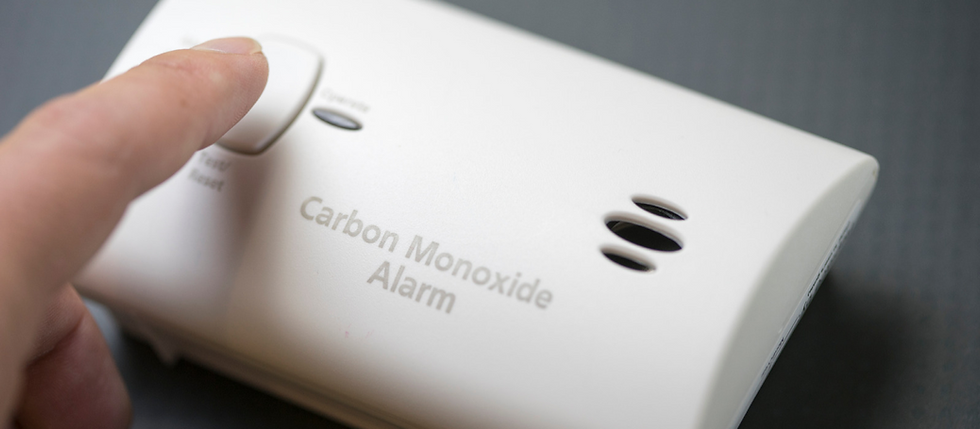
Fit an audible carbon monoxide alarm that meets the British Standard EN 50291 in every room with a fixed combustion appliance, including gas boilers, gas fires, log burners, and open fireplaces.
Never use a barbecue, camping stove, or petrol generator indoors, in a garage, or in any enclosed space, even briefly.
Check alarms regularly and replace them according to the manufacturer's guidance, since most have a limited working life.
Public health estimates put the accidental death toll from carbon monoxide poisoning in England and Wales at around 30 to 50 people a year, with roughly 4,000 people attending A&E annually because of exposure. Fewer than 1 in 10 UK homes currently has a working carbon monoxide alarm fitted, which leaves a genuinely large gap between the risk and how well protected most households actually are.
A trainer's note
We teach recognising a deteriorating casualty on every first aid course we run across Bournemouth, Poole, Christchurch, and the wider Dorset area, and carbon monoxide poisoning is one of the clearest reasons that skill matters. It rarely announces itself. It looks like a headache, a bit of nausea, feeling unusually tired for no obvious reason, right up until it becomes something far more serious. If this is the week you finally fit a carbon monoxide alarm or book your boiler's annual service, that's a genuinely good use of the darker evenings ahead.
FAQ
When do most carbon monoxide deaths happen in the UK? The majority occur between November and February, when heating appliances that have sat unused over spring and summer are switched back on, often revealing faults that went unnoticed.
What are the early symptoms of carbon monoxide poisoning? Headache, dizziness, nausea, tiredness, confusion, and breathlessness are the most common early signs. They're often mistaken for a cold, flu, or hangover, which is part of why carbon monoxide is so dangerous.
How do I know if it's carbon monoxide and not just a cold or flu? A strong clue is if everyone in the house feels unwell at a similar time, or if symptoms improve when you leave the property and return when you're back inside. If in doubt, get outside into fresh air and seek advice.
Where should I put a carbon monoxide alarm? In every room containing a fixed combustion appliance, such as a gas boiler, gas fire, log burner, or open fireplace, choosing an alarm that meets the British Standard EN 50291.
What should I do if my carbon monoxide alarm goes off? Get everyone out of the property into fresh air immediately, turn off appliances only if it's quick and safe to do so, and call the Gas Emergency Helpline on 0800 111 999. Call 999 if anyone has severe symptoms or has lost consciousness.
Cracking Training's Emergency First Aid at Work courses cover recognising and responding to poisoning and deteriorating casualties, delivered right here in Bournemouth and across Dorset. See our upcoming courses or get in touch to book training for your workplace or family.
Resource:
Health and Safety Executive, carbon monoxide guidance: https://www.hse.gov.uk/gas/domestic/co.htm
Gas Safe Register (find a registered engineer): https://www.gassaferegister.co.uk/
National Gas Emergency Service: https://www.nationalgas.com/emergency-contacts


Comments